Posts

Showing posts with the label extended priming

Case Study: Understanding the Effect of SALICYLIC ACID on Tomato Priming

Image
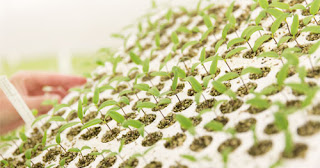
It has been found that seed priming increases the vigor of many vegetable crops To enhance tomato seed priming under high-temperature stress conditions, seed priming with salicylic acid was examined. Salicylic acid was studied to determine how it affects tomato vegetative growth, yield, and fruit quality.  Three replications were conducted in a completely randomized experimental design. There were three levels of salicylic acid applied to tomatoes (0.25mM, 0.5mM, and 0.75mM).  High temperatures severely reduced tomato germination and vegetative and reproductive growth. Under stress conditions, salicylic acid-primed seeds improved both germination rates and germination times.  In tomato fruit, salicylic acid significantly affected the TSS, TA, vitamin C, and lycopene contents. A significant increase in tomato fruit yield was achieved with the exogenous application of salicylic acid. Methods and Materials: A surface sterilization study was conducted on tomato seeds with 0....
Four effective seed enhancement methods

Image
  Physiological, logistical, and ecological-environmental factors have been attributed to the high failure rates associated with seed-based restoration. Low seed viability, dormancy, limited emergence, variation in seed size and morphology, and variegation in environmental conditions are all factors that pose challenges. Researchers and developers are urgently needed to develop seed enhancement technologies (which can be artificially treated so that seeds can germinate and establish on demand), a step that can improve the quality, reliability, and deliverability of native seed batches and make them more resilient to environmental stresses, such as moisture and temperature extremes, and ecological challenges. Due to a variety of reasons, seed enhancement technologies have received limited attention in ecological restoration, including high initial equipment costs and difficulties scaling the process. Nevertheless, such technologies are common in the supply chains for crop and h...