Posts

Showing posts with the label seed enhancement

Case Study: Understanding the Effect of SALICYLIC ACID on Tomato Priming
Image
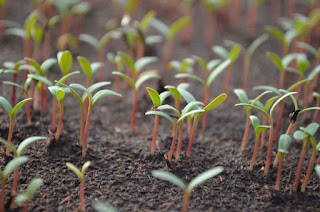
It has been found that seed priming increases the vigor of many vegetable crops To enhance tomato seed priming under high-temperature stress conditions, seed priming with salicylic acid was examined. Salicylic acid was studied to determine how it affects tomato vegetative growth, yield, and fruit quality.  Three replications were conducted in a completely randomized experimental design. There were three levels of salicylic acid applied to tomatoes (0.25mM, 0.5mM, and 0.75mM).  High temperatures severely reduced tomato germination and vegetative and reproductive growth. Under stress conditions, salicylic acid-primed seeds improved both germination rates and germination times.  In tomato fruit, salicylic acid significantly affected the TSS, TA, vitamin C, and lycopene contents. A significant increase in tomato fruit yield was achieved with the exogenous application of salicylic acid. Methods and Materials: A surface sterilization study was conducted on tomato seeds with 0....


Climate Mitigation and Change Adaption Measures

Image
  We are all affected by climate change, just as we are affected by our breath. People who have experienced floods, hurricanes, and forest fires know how important the environment is to our quality of life.  In metro cities where the city is heating up and pollution is increasing, we have increasingly found it difficult to breathe and be outside in extreme temperatures. Climate change is regarded as "the greatest threat to global health in the 21st century" by the World Health Organization. Climate mitigation is a necessity as climate change damages can be minimized if we combine our efforts and take appropriate mitigation measures:  Enhancing energy efficiency and choosing renewable energy over fossil fuels.  Promoting public transportation and sustainable mobility can be achieved by increasing bicycle trips in towns, reducing flights, and taking more trips by train or shared vehicles.  Develop an eco-industrial sector, agricultural, fishing, and livestock pro...

Four effective seed enhancement methods

Image
  Physiological, logistical, and ecological-environmental factors have been attributed to the high failure rates associated with seed-based restoration. Low seed viability, dormancy, limited emergence, variation in seed size and morphology, and variegation in environmental conditions are all factors that pose challenges. Researchers and developers are urgently needed to develop seed enhancement technologies (which can be artificially treated so that seeds can germinate and establish on demand), a step that can improve the quality, reliability, and deliverability of native seed batches and make them more resilient to environmental stresses, such as moisture and temperature extremes, and ecological challenges. Due to a variety of reasons, seed enhancement technologies have received limited attention in ecological restoration, including high initial equipment costs and difficulties scaling the process. Nevertheless, such technologies are common in the supply chains for crop and h...