Posts

Showing posts with the label soil salinization

Climate Mitigation and Change Adaption Measures
Image
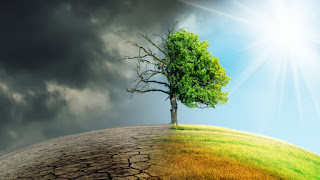
  We are all affected by climate change, just as we are affected by our breath. People who have experienced floods, hurricanes, and forest fires know how important the environment is to our quality of life.  In metro cities where the city is heating up and pollution is increasing, we have increasingly found it difficult to breathe and be outside in extreme temperatures. Climate change is regarded as "the greatest threat to global health in the 21st century" by the World Health Organization. Climate mitigation is a necessity as climate change damages can be minimized if we combine our efforts and take appropriate mitigation measures:  Enhancing energy efficiency and choosing renewable energy over fossil fuels.  Promoting public transportation and sustainable mobility can be achieved by increasing bicycle trips in towns, reducing flights, and taking more trips by train or shared vehicles.  Develop an eco-industrial sector, agricultural, fishing, and livestock pro...

Cause and effects of global warming | SaliCrop

Image
 Global warming, also called climate change, is an ongoing and man-made phenomenon. It's a result of an increase in the Earth's surface temperature. Learn about the causes and effects of global warming.

Four effective seed enhancement methods

Image
  Physiological, logistical, and ecological-environmental factors have been attributed to the high failure rates associated with seed-based restoration. Low seed viability, dormancy, limited emergence, variation in seed size and morphology, and variegation in environmental conditions are all factors that pose challenges. Researchers and developers are urgently needed to develop seed enhancement technologies (which can be artificially treated so that seeds can germinate and establish on demand), a step that can improve the quality, reliability, and deliverability of native seed batches and make them more resilient to environmental stresses, such as moisture and temperature extremes, and ecological challenges. Due to a variety of reasons, seed enhancement technologies have received limited attention in ecological restoration, including high initial equipment costs and difficulties scaling the process. Nevertheless, such technologies are common in the supply chains for crop and h...

Improving crop yield in Saline Soil Conditions | SaliCrop

Image
SaliCrop's formulation is applied at early growth stages as a seed enhancement, stimulating a reaction that increases the plant's capability to endure salinity, heat, and drought conditions. Soil salinization helps to improve crop yield  

Optimize crop yield: key takeaways from soil salinization report

Image
  Salinization of Soil - What Is It? Excessive salt accumulation in the soil is known as soil salinization . NaCl is commonly used in this process. In addition to these, the list also includes various sodium, potassium, calcium, magnesium, sulfates, chlorides, carbohydrates, and bicarbonates. The salt-affected piles of the earth are generally classified as saline, sodic, and saline-sodic, depending on the type of salt content. Water absorption is one of the primary effects of soil salination on plant growth. The inability to absorb enough water even when the soil is sufficiently moist causes crops to wilt and die. The report of the Intergovernmental Science-Policy Platform on Biodiversity and Ecosystem Services (IPBES) of 2018 reveals that as a global scale: Approximately 190 million acres have been completely destroyed; There is damage to 150 million acres; Salinization affects 2.5 billion acres. Soil salinization: what causes it? The earth becomes salinized when soluble salts a...